Showing posts with label MlOps. Show all posts

Saturday, November 8, 2025

MCP - Model Context Protocol

November 08, 2025 0


MCP - Model Context Protocol:

MCP defined a LLM to access an external data, tools and context in a a structure way. MCP (Model Context Protocol) is an open-source standard for connecting AI applications to external systems and data.

Overview of MCP:

AI application such as Claude or chatGPT can connect to data sources, tools [search engine] and workflow [prompts] through MCP and perform a tasks.

MCP like an interface which communicated to MCP client and discover their requirement and offer available services for their requirement. 
MCP Framework:
  • MCP SDK - It is a foundation for all the MCP development. It will use for Production and standard projects. It can be integrate into any tools or transport (STDIO, SSE)
  • FASTMCP 1.0 - It became a legacy support and integrated into MCP python SDK.
  • FASTMCP 2.0 - This is a latest and modern feature tools kits for advanced MCP workflows.
  • Others Frameworks - Java SDK and third party libs in other languages.
Agent workflows inside of Memory:


RAG - Retrieval Augmented Generation
It converts a data into numerical representation where each piece of data has information about how it relates to others.
Retrieval - when user ask a question or search, RAG turns question or search into own numerical representation (Embedding) and find a data which is similar meanings.
Augmentation - The top search result are then added into prompt and send to back to LLM
Generation - The search results give the LLM some local context and consider as response.
Embedding:
Embedding represent text as set of numerical data along with tensors (different dimensions)
Each dimension will store some information about text meaning or syntactical meaning.
Each words or sentence with similar meaning are stored near by vector space.
Models will learn to place a similar words or sentences close  together in the embedded space.
Common pre-trained models such as BERT and RoBERTs are  used for generating an embedding inside of vector space.
We can able to use an embedded for NLP tasks like semantic search, text classification and sentimental analysis.
Agentic RAG:
It is integrate an AI agents to enhance the RAG approach. It will breakdown from complex queries into manageable parts and using API tools where need to augment processing and better result.


Implementation of AI agent

November 08, 2025 0


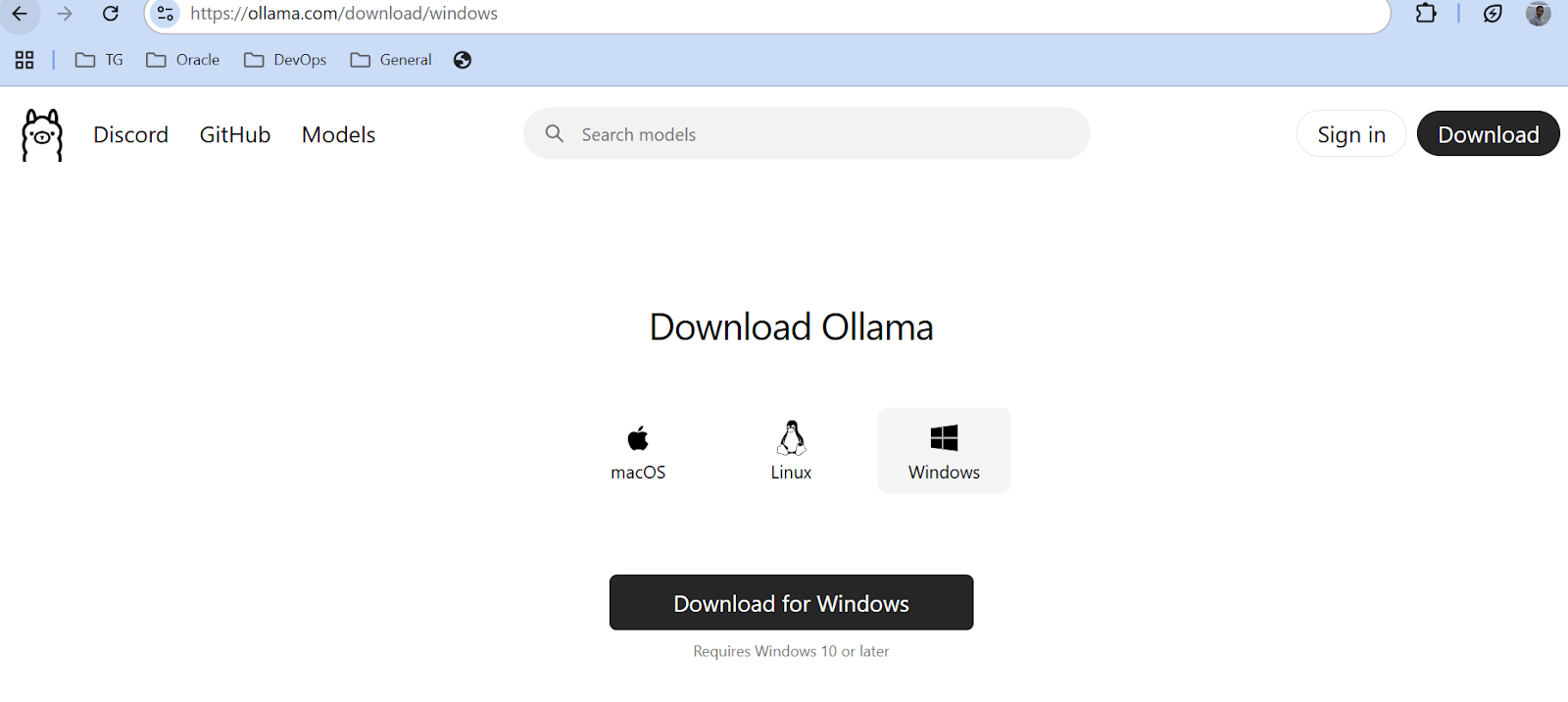
Installation of Ollama:
Ollama is an open source tool which will helps us to run a NLP [Natural Language Processing] through locally.
Step1) Downloading the Ollawa tool for your suitable operating system and installed it.


Friday, March 28, 2025

Large Language Model [LLM] - Introduction

March 28, 2025 0


LLM stands for Large Language Model. It is specifically a deep learning model, trained on massive amounts of text data to understand and generate human language, enabling tasks like text generation, translation. It often sing "Transformer" models which are neural networks that can process relationships within language.


Reasoning LLMs


Traditional LLM workflow


Traditional LLM model is refine a dataset into pretraining workflow. The pretraining send a data into fine tuning model and give a precise collected output data. It will send it to human feed back and correct incase of any mismatch with fine tuning model.

Traditional LLMs
  • Direct pattern based prediction
  • Quick but less reliable on complex tasks
  • No explicit reasoning steps

Reasoning LLM:
  • Language models are designed complex and multiple set problems
  • Break down tasks into logical sub tasks.
  • Generate intermediate reasoning steps "thought processes"
Key Capabilities of Reasoning LLMs:
1) Chain-of-Thought Reasoning
        Internal dialogue approach
        step-by-step problem solving
2) Self consistency
        Verified own answers
        Revisits problematic solutions
3) Structured Outputs
        Organized reasoning steps

Practical Applications of Reasoning LLMs
Data Analysis
Medical diagnostics
Complex data interpretation
Anomaly detection
Background Processing
Batch processing workflows
Overnight analysis jobs
Evaluation Tasks
LLM as judge
Quality assessment
Verification workflows
Limitation of Reasoning LLM
Performance Trade-offs
* Increased latency : extended thinking process leads to significantly longer response times
* Higher resource requirements: ofent require more computational resoures
* cost-implications: More tokens and processing time translate to higher operational costs
DeepSeek:

    DeepSeek applied supervised fine-tuning to refine the models' capabilities. This involved training on datasets containing reasoning and non-reasoning tasks. Notably, reasoning data was generated by specialized "expert models" trained for specific domains such as mathematics, programming, and logic. These expert models were developed through supervised fine-tuning on both original responses and synthetic data generated by internal models like DeepSeek-R1-Lite. The use of expert models allowed DeepSeek to generate high-quality synthetic reasoning data to enhance the primary model's performance.